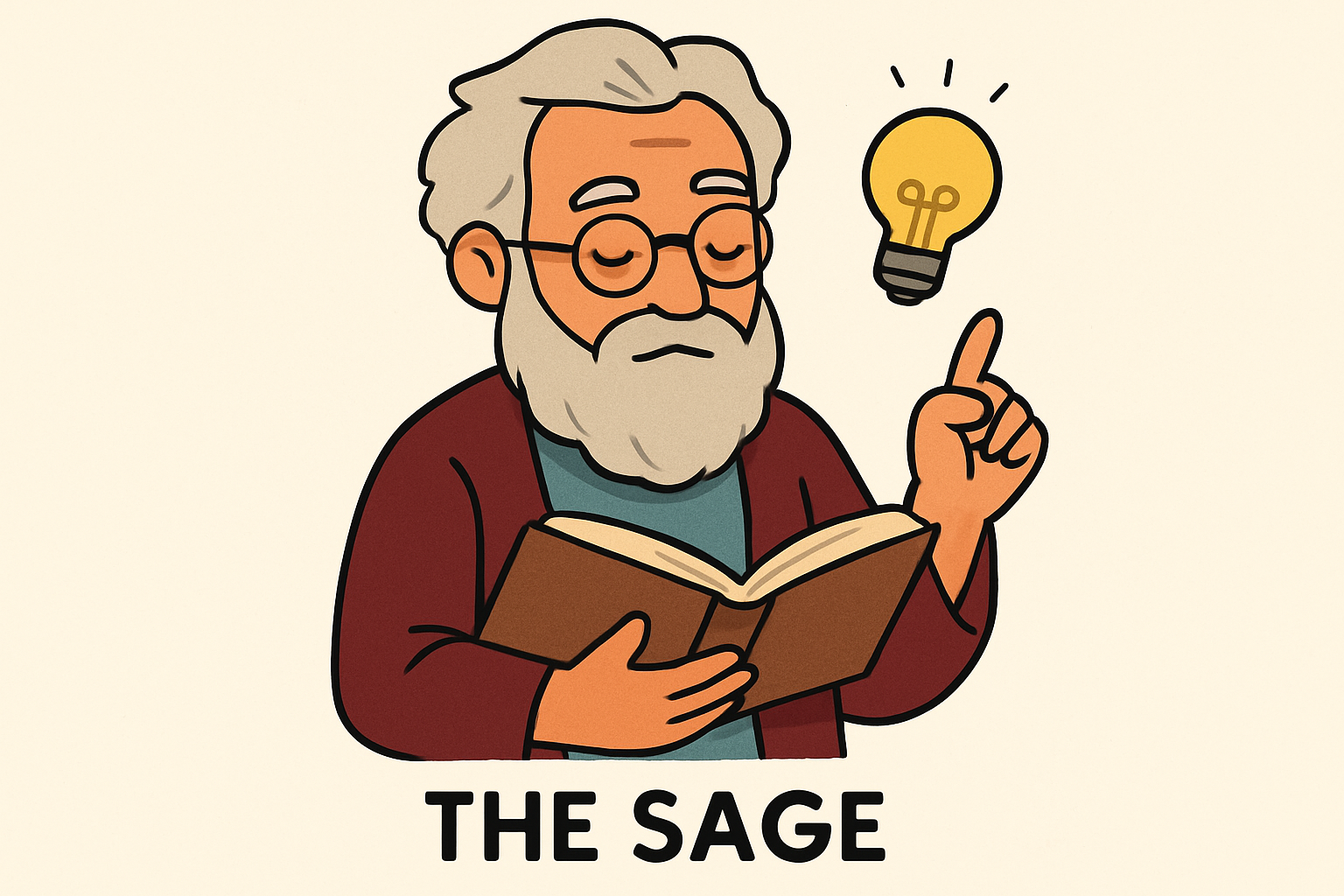
Among the twelve classic brand archetypes, the Sage stands as the personification of wisdom, truth, and intellectual curiosity. If your organization seeks to guide, inform, and illuminate new perspectives—helping audiences make sense of a complex world—the Sage offers a timeless and trusted framework for your brand.
What is the Sage Archetype?
The Sage archetype centers on the relentless pursuit of knowledge and the sharing of that wisdom to help others achieve clarity and insight. Sage brands are respected authorities, mentors, and teachers—dedicated to informing, educating, and enabling intellectual growth. They empower stakeholders to make better decisions by sharing truth, guidance, and understanding.
Core Traits
- Deeply knowledgeable and objective
- Analytical and insightful
- Wise, trustworthy, and cautious
- Open-minded and clarity-driven
- Motivated by a passion for learning, teaching, and seeking the truth
Core Desire
- Discovering, understanding, and communicating truth; enabling others to grow and thrive through knowledge, not power
Do you Identify with the Sage Archetype?
Sage brands:
- Build trust as thought leaders and reliable experts within their field.
- Attract audiences drawn to education, personal growth, and credible information.
- Foster communities focused on learning, exploration, and critical thinking.
- Maintain brand loyalty by consistently offering value through unique insight and clarity.
Industries that naturally align with the Sage archetype include education, research, publishing, consulting, technology, science, and news media brands.
Iconic Sage Brands
| Brand | How They Embody the Sage Spirit |
|---|---|
| Organizes and shares the world’s information to make it universally accessible and useful | |
| TED | Spreads “ideas worth spreading,” featuring experts and thought leaders |
| National Geographic | Explores and explains science, nature, and culture through trusted storytelling |
| Encyclopedia Britannica | Delivers authoritative, accurate information for over 250 years |
| Smithsonian | Offers deep knowledge and preserves cultural/scientific heritage |
| The New York Times | Upholds journalistic integrity and in-depth, objective reporting |
How to Show Up as a Sage Archetype Brand
1. Lead with Education and Insight
Center your communications around delivering trustworthy, well-researched content—blogs, tutorials, white papers, webinars, and case studies. Prioritize sharing knowledge that empowers and enables your audience to think and act independently.
2. Demonstrate Authority and Clarity
Establish credibility through visible expertise: highlight credentials, research, and transparent processes. Use clear, direct communication to distill complex topics into accessible insights.
3. Foster Intellectual Curiosity
Invite your audience to learn, question, and discover alongside your brand. Pose big questions, challenge assumptions, and encourage critical thinking through storytelling, thought-provoking content, and expert collaboration.
4. Cultivate a Trusted, Reflective Voice
Adopt a thoughtful, measured tone—analytical but approachable. Avoid jargon or elitism; instead, aim for clarity and relatability without sacrificing depth3. Use a minimalist, professional visual style to evoke trust and intelligence.
5. Empower and Guide—Never Push
Sage brands are guides, not dictators. Focus on enabling others with information so they can form their own conclusions and decisions.
Common Pitfalls
- Appearing Elitist: Expertise can unintentionally alienate people, especially today. Stay relatable and inclusive.
- Overly Complex Messaging: Break down sophisticated ideas into bitesize chunks–without patronizing or oversimplifying.
- Losing Connection: Don’t let objectivity turn into coldness; show empathy and genuine interest in your audience’s growth.
Is Your Brand a Sage?
Ask yourself:
- Do you strive to be a trustworthy guide, mentor, or teacher for your audience?
- Does your brand’s voice reflect expertise, integrity, and a quest for truth?
- Do you value continuous learning, clarity, and genuine enlightenment above trends or hype?
If so, the Sage archetype can guide your brand toward becoming an influential authority and a beacon of wisdom for your community.
Building Flywheel Momentum for your Sage Brand
Sage brands build momentum by turning steady creation of insight into a self-reinforcing cycle of discovery, application, and community learning. Here are some ideas for momentum-building:
Deepen Signature Thought Leadership
- Develop a flagship content asset (annual report, field guide, or research series) that becomes a recurring event your audience anticipates each year or quarter.
- Turn core frameworks into named models or methodologies you consistently reference, so your ideas become mental “shortcuts” people spread on your behalf.
ACTION: Develop a time frame for publishing your new asset. Review your existing content, studies, research. If you can create a consistent pattern, this will keep your target demographic coming back for more on your schedule.
Design learning journeys, not one-offs
- Convert standalone blogs and webinars into structured learning paths—e.g., “From Curious to Competent” sequences with clear stages and outcomes.
- Offer tiered depth (intro, intermediate, advanced) so the more people learn, the more they see the next step with your brand as the obvious move.
ACTION: Look internally at your team and assess each member’s potential to lead this effort. Do you have the internal capacity to pull something like this off or do you need to engage outside help? Either way, an investment in a propgram like this could pay off for a long time, so it may well be worth the investment.
Activate Your Community
- Create spaces (roundtables, office hours, invite-only forums) where your audience shares questions, data, and experiments, positioning your brand as the facilitator of collective insight.
- Systematically harvest these interactions into new content: FAQs, case studies, and “field notes” that credit the community and feed the next cycle of learning.
ACTION: Review your past attempts to get feedback. Is there enough there to publish, or do you need to engage them again with a survey or prompts on social media? Engaging your audience in this way can provide new leads, new content, and reinforce the notion that you’re genuinely interested in people’s thoughts and their desire to learn.
Sell Your Wisdom
- Translate your expertise into toolkits, decision frameworks, scorecards, or checklists that help people apply what they learn without your constant involvement.
- Wrap recurring services into programs (audits, advisory retainers, labs) that promise ongoing clarity, not just one-time answers, so staying engaged compounds value.
ACTION: Start compiling resources into a folder that you could potentially share to respondents to a form on your website. Give it a good name and sell it.
Close the Loop with Proof and Reflection
- Routinely publish “What we’re learning now” updates that synthesize patterns from your work, tying outcomes back to earlier ideas you’ve shared.
- Build a habit of post-project debriefs and public retrospectives—showing how your thinking evolved reinforces your role as a living, learning Sage, not a static expert.
ACTION: Building and maintaining momentum for your Brand Flywheel takes time and long-term dedication. It is the very fact that you are showing consistent effort to reinforce your values that attracts the kind of customers you seek. Even sharing the lessons you’ve learned to build Flywheel momentum can be incredibly endearing to your constituency. Set a time table for reflecting back (the end of the year is great) and share what you’ve learned.